mk-drive
A web drive over the folders you already have.
Runs today. The iOS app is in TestFlight.
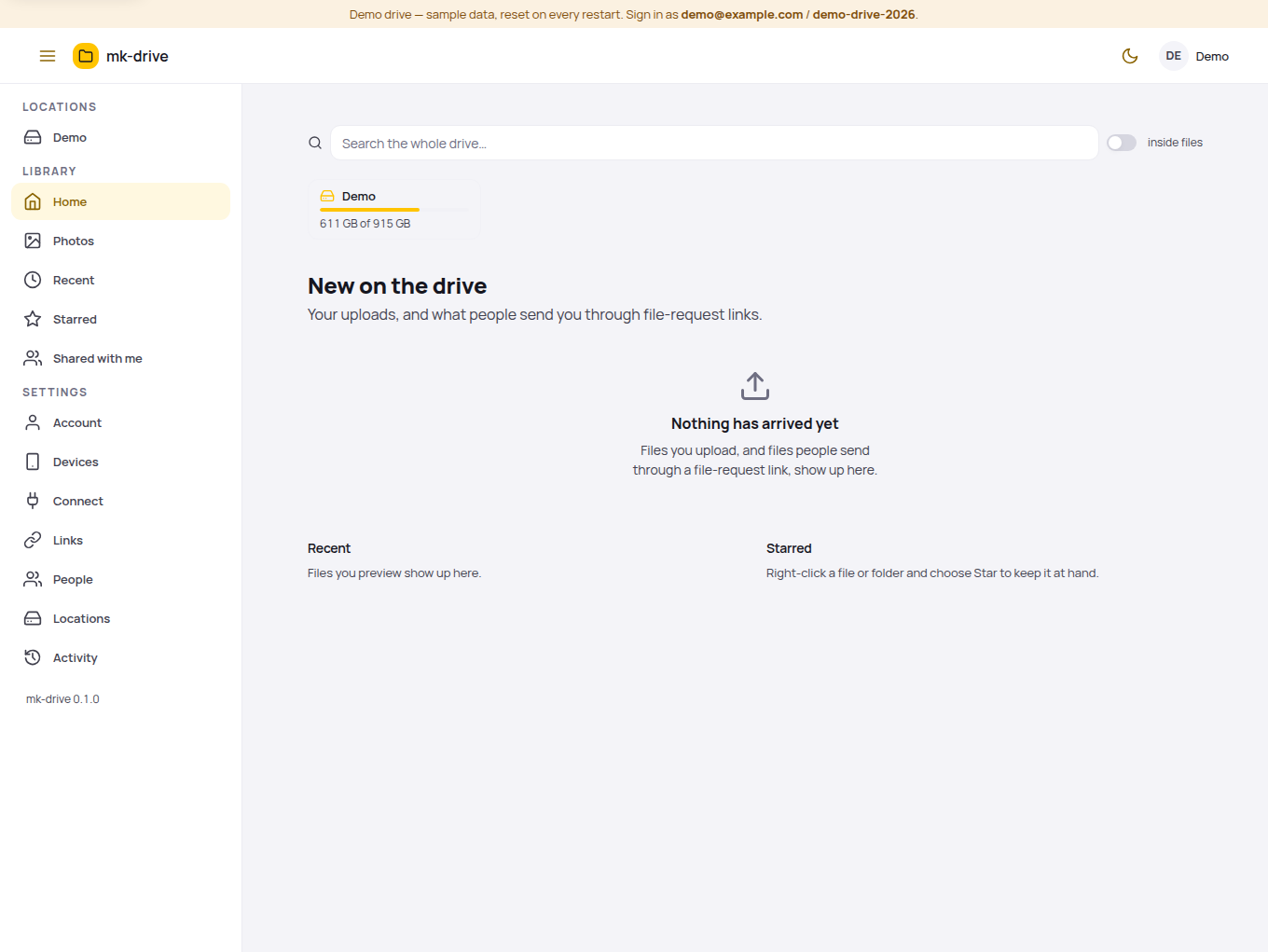
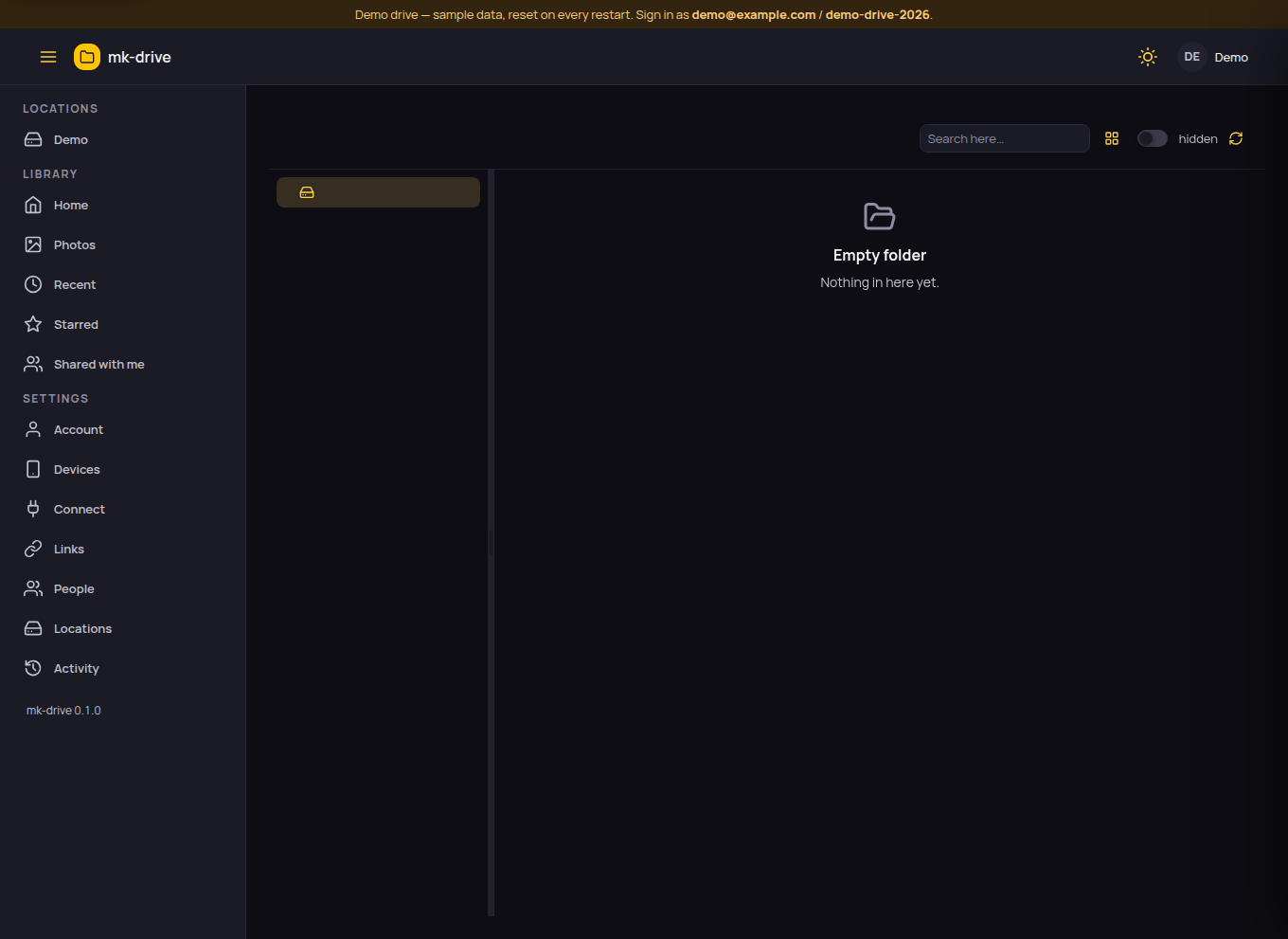
What it does
- Point it at directories — a disk, an NFS or SMB mount, a USB stick — and browse, preview, upload and share them from a browser or the phone.
- The filesystem is the truth. No database, no import: files you drop into a folder by any other means are simply there.
- Share a file or a folder with a link, with a password and an expiry if you want them; ask for files with a request link.
- Photos on a timeline, video and PDF thumbnails, text editing in place, a trash that keeps what you deleted, search inside PDFs.
- Sign in with a password or with any OpenID Connect provider. App passwords for WebDAV, Finder, Files and the iOS app.
- On a machine that runs mk-nas the same app grows a Storage section: disks, pools, datasets, snapshots, shares, copies.
On your iPhone
The same drive, in your pocket.
- Your drive in the Files app, next to iCloud. Every other app on the phone can open and save there.
- Upload from the share sheet, from Photos, from Files. Big files go in pieces and resume when the connection drops.
- Share a link with a password and an expiry. Revoke it from the phone or from the drive.
- The phone holds an app password in the Keychain, never your real one. Cut a lost phone off from the drive.
App Store listing comingIn TestFlight now; the App Store listing follows.
Details
- One container
Point DRIVE_LOCATIONS at the folders; the first start creates the admin account.docker run -p 8810:8810 -v /path/to/files:/locations/files -v mk-drive-data:/data ghcr.io/mkornas/mk-drive- iPhone
- Get it for iPhoneIn TestFlight now; the App Store listing follows.
- Runs on
- Any Docker host. Linux, a NAS, a VPS.
- Licence
- MIT, free and open source. The iPhone app is a paid app on the App Store.
- Source
- github.com/mkornas/mk-driveThe README is the manual: read it.
- Privacy
- What the app collects, and what it does not
- Help
- Support for mk-drive
- Terms
- Terms of use for the iPhone app